
Yükleniyor...
Yükleniyor...
Digital Dentistry It's easy to contact Denta Center! Submit the form and we will get back to you within half an hour at the latest. Digital dentistry is a system that enables the design and production of processes that a
Digital dentistry is a system that enables the design and production of processes that are currently performed with conventional methods, with computer and cad/cam.
The time spent by the patient in the clinic and the number of sessions are reduced. The total duration of the treatment varies according to the number of renewals to be made. Treatment can be done in one day without the need for a temporary tooth.
The probability of technical errors in the computer assisted treatment process is very low. The shrinkage and distortion problems of the measure have been eliminated.
Production is made in the form designed in the computer system. In implant applications, the worry of patients not looking beautiful is eliminated. Without the toothless appearance; With cad/cam systems, temporary works are made in a short time.
Since the material is not used for measuring, some people do not experience unavoidable discomfort such as nausea. Comfortable sessions take place.
With the help of the catalog in the device, the patient can choose the tooth design he deems suitable for him. As soon as the procedures are finished; Temporary teeth can be produced. Treatments are usually completed in a single session. Some treatments may require 3-4 days. Cad cam is a technology that includes computer-aided design and production. It is used in many areas in today's dentistry. Thanks to the shortening of the treatment time and reducing the error rate with the measurements made in the digital environment, its usage areas are increasing.
In which areas of dentistry is Cad/Cam technology used?
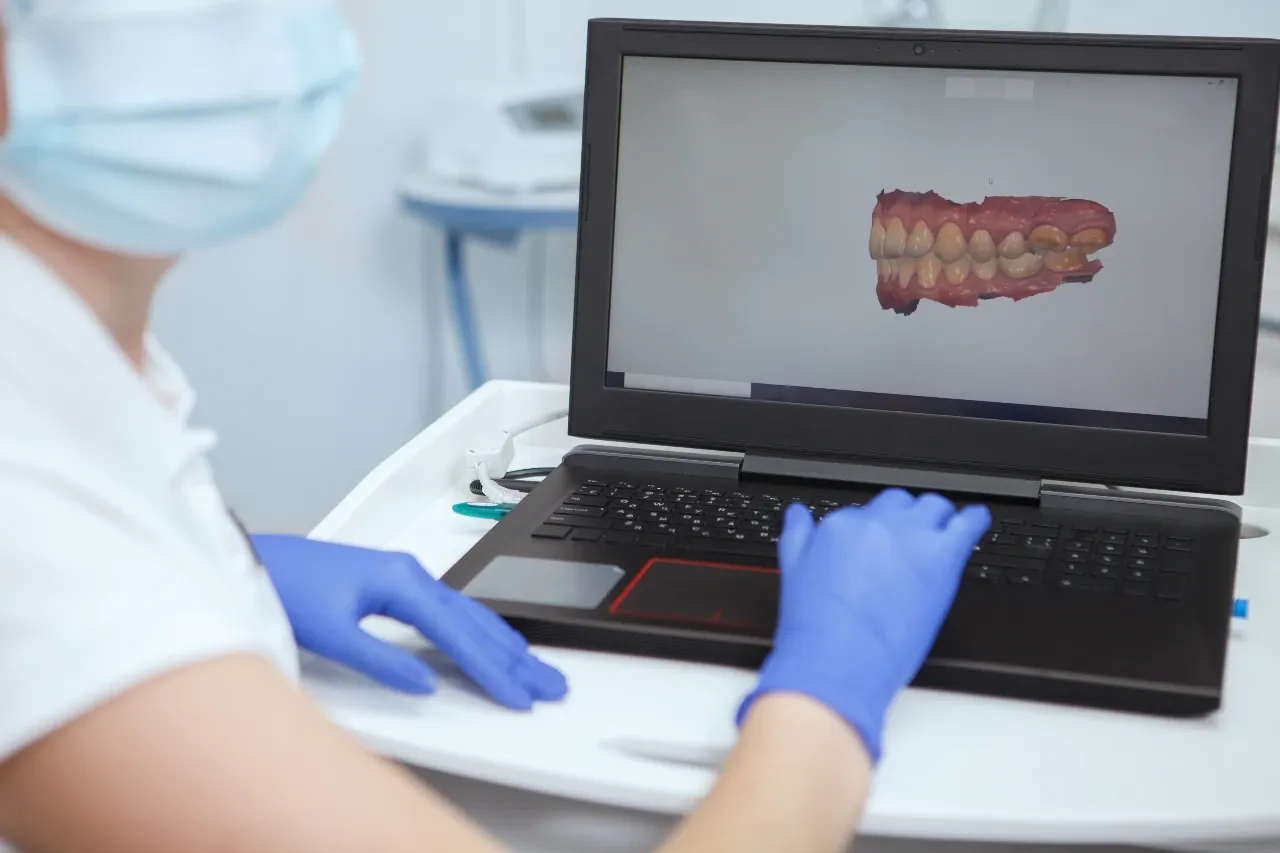
Thanks to the surgical guide plates produced with 3-dimensional intraoral scanning, where and how the implants will be placed can be planned, and thus surgical operations can be performed that minimize the risk of error.3D printers produce virtually designed teeth in a digital environment by scraping blocks containing materials such as zirconia. The teeth are scraped from the zirconia blocks layer by layer and after 2-6 hours they are ready for the next procedures. These cameras, which are used in intraoral scanners, are moved around the patient's mouth by the physicians. In this process, the camera takes images and the intraoral scanner combines these images to create a 3D model of the patient's mouth. At first, the patient is examined and a personalized draft treatment plan is drawn up. After the examination of the teeth, the intraoral image obtained after the intraoral scanning is transferred to the digital environment and a digital smile design is made here. The patient can observe the final form of their teeth in this digital system after the treatment starts. While designing the smile, considering the patient's wishes, the face and jaw shape, and the revised smile design with aesthetic improvements are presented to the patient. The physician and the patient together make the necessary improvements and create the final treatment plan, and the patient's treatment is started. Digital dentistry is used in many areas, especially implant treatment, lamina treatment, full ceramic coatings and smile design. Since the measurement can be made with conventional methods, it can also be done using Intraoral Scanner, that is, intraoral scanner devices. This method is faster and has a lower margin of error. With a device with a camera and sensor at the tip, the inside of the mouth is scanned completely in 3D. This device does not emit radiation, but it does not emit radiation. There is no harm to health either. After scanning with an intraoral scanner, the 3D image here is transferred to a special digital computer called CEREC, where necessary arrangements are made and personalized treatment is carried out. Thanks to digital dentistry, teeth can be made in the same color as the natural tooth or in the color and tone desired by the patient. Not only the color, but also the teeth with a more aesthetic appearance morphologically can be presented to the patient.
Digital dentistry is becoming more and more common day by day. In this process, old-style methods are still being used. The materials used in these old methods can make the patient nauseous, so digital impression methods are especially recommended for patients with nausea problems. Digital scanning of the patient's mouth with an intraoral scanner usually takes 4-5 minutes. Although the stage of designing and preparing the teeth after scanning varies depending on the current density and workload of the clinic, the teeth that are ready within an average of 1 week are attached to the patient's mouth.
Generally, zirconium and composite porcelain blocks are used in the preparation of digital models of teeth in the excavator. The material here is selected in line with the patient's wishes and the physician's decision. While selecting the material, the condition of the teeth, whether they have aesthetic concerns and the load on the tooth are checked. The material is selected according to the patient's treatment plan. Do not hesitate to prevent your teeth from losing their functionality day by day for fear of not finding a cost-effective dental implant.
And you should not avoid having a perfect smile. At DENTACENTER, we will do everything we can to fulfill the dental and oral health of our valued patients with our flexible financial options.
We know how important your oral health and the pleasure of eating are. Call Denta Center Dental Clinic now and make an appointment to contact our experienced and knowledgeable team to plan your needs and treatments. These cameras, which are used in intraoral scanners, are moved around the patient's mouth by the physicians. In this process, the camera takes images and the intraoral scanner combines these images to create a 3D model of the patient's mouth. Digital scanning of the patient's mouth with an intraoral scanner usually takes 4-5 minutes. Although the stage of designing and preparing the teeth after scanning varies depending on the current density and workload of the clinic, the teeth that are ready within an average of 1 week are attached to the patient's mouth. Thanks to the surgical guide plates produced with 3-dimensional intraoral scanning, where and how the implants will be placed can be planned, and thus surgical operations can be performed that minimize the risk of error.
If you have not yet found the information you are looking for, you can find answers to all your questions by our specialist dentists by contacting us.
Digital Dentistry için uzman hekimimizle ilk muayene ücretsiz.
Contact us now for a free 30-minute consultation with our expert doctors.