
Yükleniyor...
Yükleniyor...
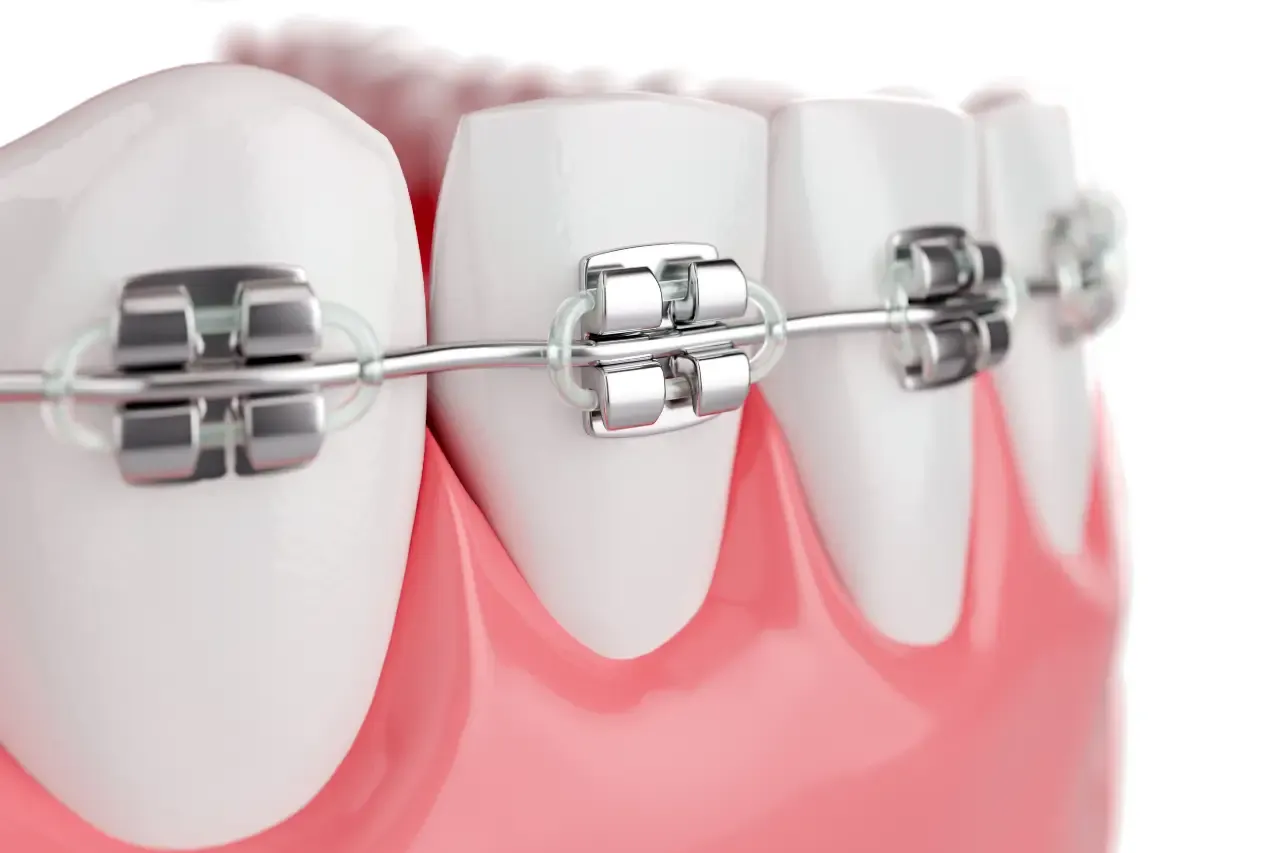
Orthodontic Treatment It's easy to contact Denta Center! Submit the form and we will get back to you within half an hour at the latest. What is Braces Treatment? Crooked teeth need to be corrected both for your health an
Crooked teeth need to be corrected both for your health and quality of life. While this may be an aesthetic need, it also closely concerns your oral health, eating-drinking, brushing and speaking habits. Orthodontic treatments are necessary for the treatment of aesthetic defects caused by crooked teeth or distorted jaws and to restore function in the best way possible. Although it is an open-ended question, it can be answered as follows. Clotting disorders called malocclusion in orthodontics are grouped as Class 1, Class 2 and Class 3. In this grouping, the concepts of deep and open closure have an important place. For example, although the patient is in the Class 1 group and does not have any closing disorder, they may apply to the clinic with aesthetic complaints, but they may have serious joint complaints due to deep bite. Correction of incisor relationship and deep bite is essential in its treatment. Class II is a problem we encounter often. It is characterized by the upper jaw being forward, the lower jaw being back, or both. In its treatment, it is essential to use functional devices (activator, bionator-twin-block, etc.) that take the lower jaw forward and inhibit the development of the upper jaw in the early period. These patients often have respiratory distress, limitation of mouth opening and serious joint complaints. With the possibility of being a candidate, their treatment is very important.
Apart from these problems, abnormal wear and cracks may occur in the teeth due to non-centric forces. The basic approach in orthodontic problems is the evaluation of genetic and environmental effects. The basic approach is to eliminate these factors in the applied treatment protocols. These 2 titles and their sub-reasons are among the main reasons for crowding and the disordered relations between the jaws.
Oral care is no different than normal oral care during orthodontic treatment. However, it is important to use specially designed orthodontic brushes and interface brushes as there is more retention area where food can accumulate. Although patients often think that brushing will damage the wires or plates, with the right brushing technique and strength, the wires will not be damaged. Yes it can be fixed. While it is possible to correct spontaneously with habit prevention in the early period, there are different alternatives that can range from extraction-supported fixed orthodontic treatments to surgical-supported orthodontic treatment in the future. If the position of the impacted tooth is suitable and there is a necessary space, it can be replaced by removing the gum and bone above it. However, it may not be possible to maintain due to anatomical conditions and tooth position. In both cases, treatment (shooting or continuation) is essential. Because impacted teeth can cause resorption, pain and dentigerous cyst formation in the roots of adjacent teeth. To give a short answer to the question of whether there is an age limit in orthodontic treatment, there is no age limit. However, not every treatment can be applied at every age. Except for special cases, there is no need for treatment under the age of 7 years. These special cases include multiple tooth deficiencies such as cleft lip and palate and oligodontia.
The general approach is that early treatment is mandatory in cases where the jaw relations are broken (lower/upper jaw retardation or forwardness). For example, 8-9 years of age for upper jaw recessions and 11-12 years for lower jaw recessions constitute the ideal period. In the later stages of development, surgical-assisted orthodontic treatment is required to solve these problems (orthognathic treatment).Among the purposes of orthodontic treatment in adult patients; It is a shooting-assisted camouflage treatment, which is an alternative method applied to patients who do not want to receive surgical-assisted treatment with smile design and arrangement of tooth positions before lamina, bridge, and implant applications.
In addition to the economic costs, discoloration and sensitivities that may occur due to micro-scratches caused by repetitive roughening and cleaning processes on the tooth surface are the damages of bracket falling off. It is also possible to prolong the treatment period due to reasons such as the balanced transfer of the applied force due to the falling of the bracket / the deterioration of the mechanics. There are 3 commonly used reinforcement methods:
And you should not avoid having a perfect smile. At DENTACENTER, we will do everything we can to fulfill the dental and oral health of our valued patients with our flexible financial options.
We know how important your oral health and the pleasure of eating are. Call Denta Center Dental Clinic now and make an appointment to contact our experienced and knowledgeable team to plan your needs and treatments. It is possible to achieve 3-dimensional movement in the teeth and to provide ideal aesthetics and function with "lingual orthodontics" applied to the back surfaces of the teeth and "transparent plaque treatment" known as wireless orthodontics. Yes it can be fixed. While it is possible to correct spontaneously with habit prevention in the early period, there are different alternatives that can range from extraction-supported fixed orthodontic treatments to surgical-supported orthodontic treatment in the future. If the position of the impacted tooth is suitable and there is a necessary space, it can be replaced by removing the gum and bone above it. However, it may not be possible to maintain due to anatomical conditions and tooth position. In both cases, treatment (shooting or continuation) is essential. Because impacted teeth can cause resorption, pain and dentigerous cyst formation in the roots of adjacent teeth.
If you have not yet found the information you are looking for, you can find answers to all your questions by our specialist dentists by contacting us.
Orthodontic için uzman hekimimizle ilk muayene ücretsiz.
Contact us now for a free 30-minute consultation with our expert doctors.