

Yükleniyor...
Yükleniyor...
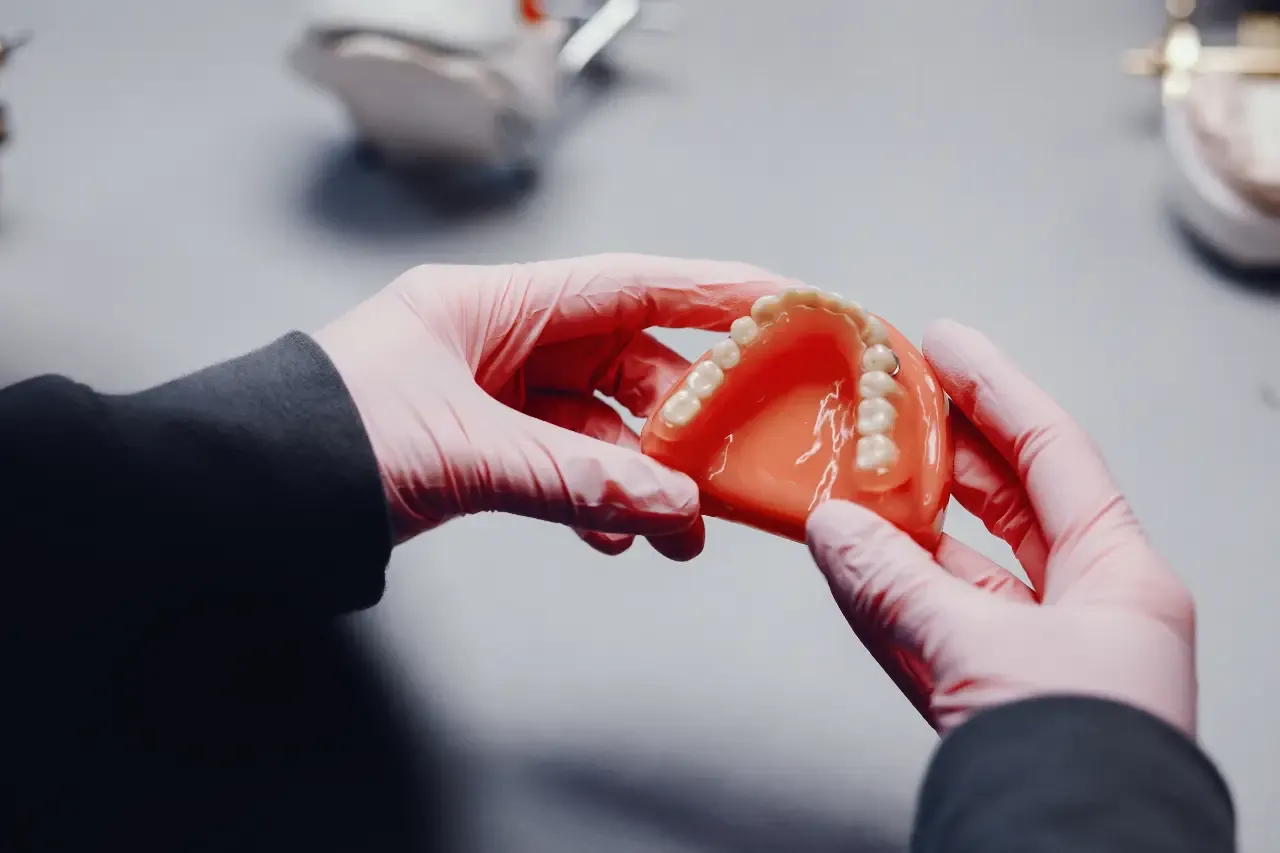
Dental Prostheses It's easy to communicate with Denta Center! Submit the form and we will get back to you within half an hour at the latest. What is a Full (Total, Removable) Prosthesis? Complete dentures are removable d
Complete dentures are removable dentures used to replace lost teeth. Dental prostheses are produced from acrylic on an acrylic base. Partial dentures are made similarly, but full dentures cover all teeth, while partial dentures are placed in place of some teeth. Full dentures can be used in cases where you have lost all your teeth and allow you to smile with confidence.
Hooked dental prostheses, also called partial dentures, are applied in cases where fixed dentures cannot be applied. It is applied by attaching to the teeth next to the non-toothed part by means of hooks. That's why they are called hooked dental prostheses. One of the types of prosthesis applied in cases where there are many missing teeth and treatment with fixed prostheses is precision attachment prosthesis. It consists of hidden retainers that fit into the slots prepared in the teeth. Although these parts make it difficult to get used to at first, after a certain period of time, the patient can use these teeth comfortably as their own. Since precision attachment dentures are supported by both soft tissue and existing teeth, there is no problem in retention and cutting, biting and grinding functions can be performed easily. How long it takes a person to get used to the prosthesis is a concept that varies from person to person.
Patients get used to their prostheses within an average of 5 weeks. In this process, the patient must be patient. If the patient feels that the prosthesis does not fit, he can apply to his doctor and ask for a change in his prosthesis. After the prosthesis is placed, the patient should be fed with light foods in small portions, slowly and without applying too much force to the teeth.
Another thing that the patient should do to get used to the prosthesis quickly is that the patient uses the prosthesis for 24 hours in the first days and does not remove it at night. This will accelerate the process of getting used to the prosthesis. After this acclimation period, the prosthesis should be removed while lying down. After eating, patients should remove the prosthesis and clean the food residues on it. Dentures should be cleaned daily with soap and water. Patients should apply light force while brushing their prosthesis. Otherwise, the prosthesis may be damaged. Prostheses should not be contacted with very high temperature water.
Prostheses are not made for life-long use because both the prosthesis wears out over time and the oral tissue changes during the use process. The prosthesis may become incompatible over time. Prostheses should be replaced in an average of 4-6 years. The number here varies according to the patient's condition. You can eat while wearing the prosthesis. Patients generally have difficulty getting used to the prosthesis in the first 4-6 weeks (adjustment period). In this process, hard and crusty foods should be avoided. Patients should not apply too much force to their teeth and should be fed with soft foods. Especially the pressure on the front teeth can move the prosthesis.
The taste of food is taken with the tongue, since there is no procedure related to the tongue in the prosthesis treatment, the patients continue to taste the foods. With the developing technology, prostheses that fit the patients' mouths can be produced and patients can continue their lives comfortably. Prosthetic teeth do not increase the formation of bacteria if regular oral and dental care is provided. Prostheses do not increase bacterial growth. After each meal and at the end of the day, the patient does not have a problem when the dentures are cleaned in accordance with the instructions of the physician. Dental prostheses are made in harmony with the mouths of the patients, and they are designed in accordance with natural teeth in terms of both appearance and harmony inside the mouth. Therefore, it is not possible to understand from the outside that the patient is using a prosthesis. Patients have difficulties in the process of getting used to the prosthesis. The prosthesis is perceived as a foreign substance in the mouth. Patients may feel fullness in their cheeks and complain about the size of the prosthesis.
Such complaints are quite normal, they will disappear on their own after getting used to. If the patient feels a knock on his prosthesis, he should consult his doctor.
The taste of food is taken with the tongue, since there is no procedure related to the tongue in the prosthesis treatment, the patients continue to taste the foods. With the developing technology, prostheses that fit the patients' mouths can be produced and patients can continue their lives comfortably. Prosthetic teeth usually do not cause pain. During the adaptation period, which we usually call the first 4-6 weeks, patients may feel incompatibility in their teeth and in the mouth. This is perfectly normal. Patients should be aware of this situation and show patience. Afterwards, the patient can get used to the prosthetic teeth and use them.
If there is a knock on the prosthetic teeth, the patient can consult his doctor and changes can be made in the prosthetic teeth.
Very rarely, patients may feel pain in their palate during the first few months of getting used to the use of dentures. If the patient continues to feel pain after 2 months, the size of the teeth may have been taken incorrectly. In this case, the patient should consult his doctor. The prosthesis should be used when needed. For example, if the patient has a large number of missing teeth, because of his advanced age, or if there is a structural weakening in his bones, these patients can be treated with prosthesis instead of implant treatment. No treatment can replace a natural tooth. Prosthetic treatment still helps the person fulfill their needs such as speech, nutrition and smiling.
Prosthetic teeth are artificial teeth designed by taking the size of the patient's mouth, so there is no decay in these teeth. However, this should not mean that the patient will neglect oral and dental hygiene. Patients should brush their teeth and go to periodic controls as directed by their physician. During the first 4-6 weeks of getting used to after dentures are placed, patients should stay away from hard and crusty foods, sticky foods such as chewing gum or foods that are difficult to tear off, and should not put too much load on their front teeth. During the acclimatization process, the patient should be gentle with the prosthesis. After the acclimatization period, patients can consume all kinds of food, regardless of whether it is hot or cold.
Implant prostheses are fixed or mobile prostheses placed on implants. If the patient has sufficient bone structure, implant supported prosthesis can be used. After the application of prosthesis on the implant, the person should definitely stay away from all tobacco products, especially cigarettes. Do not hesitate to prevent your teeth from losing their functionality day by day for fear of not being able to find affordable dental prosthesis.
And you should not avoid having a perfect smile. At DENTACENTER, we will do everything we can to fulfill the dental and oral health of our valued patients with our flexible financial options.
We know how important your oral health and the pleasure of eating are. Call Denta Center Dental Clinic now and make an appointment to contact our experienced and knowledgeable team to plan your needs and treatments. Dental prostheses are made in harmony with the mouths of the patients, and they are designed in accordance with natural teeth in terms of both appearance and harmony inside the mouth. Therefore, it is not possible to understand from the outside that the patient is using a prosthesis. After the impression is taken, the prosthesis begins to be prepared. Generally, the prosthesis is ready in 4-5 sessions and in 1-1.5 months and the patient starts to use it. Patients should not leave their prostheses dry. When the prosthesis is not in the patient's mouth, it should be placed in a water containing mouthwash. The prosthesis should not come into contact with very high temperature water. You can use the prosthesis for a longer time if the doctor's recommendations about prosthesis care are followed.
If you have not yet found the information you are looking for, you can find answers to all your questions by our specialist dentists by contacting us.
Dental Prostheses için uzman hekimimizle ilk muayene ücretsiz.
Contact us now for a free 30-minute consultation with our expert doctors.